 English


Views: 0 Author: Site Editor Publish Time: 2026-04-15 Origin: Site


Section | Summary |
What Is a Fresnel Light? | A definition of the fixture and its distinct optical characteristics. |
How Does a Fresnel Light Work? | An explanation of the stepped lens and internal lamp movement mechanics. |
Advantages of Using Fresnel Lights | Key benefits including beam control, soft shadows, and light quality. |
Types of Fresnel Lights | A comparison of LED, Tungsten, and HMI sources for different needs. |
Applications of Fresnel Lighting | Practical uses in film, broadcast news, and theatrical stages. |
Comparing Fresnel Lights to Other Fixtures | How it stacks up against Ellipsoidals, Panels, and PAR lights. |
Choosing the Right Fresnel Light | Critical factors to consider, such as CRI, wattage, and cooling. |
How to Set Up Fresnel Lights Properly | Best practices for mounting, focusing, and using barn doors. |
A Fresnel light is a focusable stage or studio spotlight characterized by its unique "stepped" lens design, which allows it to cast a clean, circular beam that can be adjusted between a narrow spot and a wide flood while maintaining soft, diffused edges.
Historically named after its inventor, Augustin-Jean Fresnel, this fixture was originally designed for lighthouses to project light over vast distances. In the context of modern studio production, the Fresnel spot is prized because it does not produce the harsh, hard-edged beam of an ellipsoidal reflector spotlight. Instead, it provides a smooth "wash" that blends seamlessly with other light sources, making it nearly indispensable for lighting human subjects.
The core identity of the Fresnel spot lies in its versatility. It fills a critical gap in lighting design, offering more control than a simple floodlight but more subtlety than a sharp profile light. Because the beam is highly controllable with accessories like barn doors, it allows technicians to shape light precisely without creating distracting shadows on the background or surrounding set pieces.
In professional B2B environments, such as television newsrooms or corporate video studios, the Fresnel light is the standard for "Key Lighting." It provides enough intensity to illuminate a subject clearly while the soft-edge falloff ensures that the subject appears natural and three-dimensional rather than flat.
The Fresnel light works by utilizing a lamp and a spherical reflector mounted on a movable track behind a specialized stepped lens; by moving the lamp closer to or further from the lens, the user can adjust the beam angle from a concentrated spot to a broad flood.
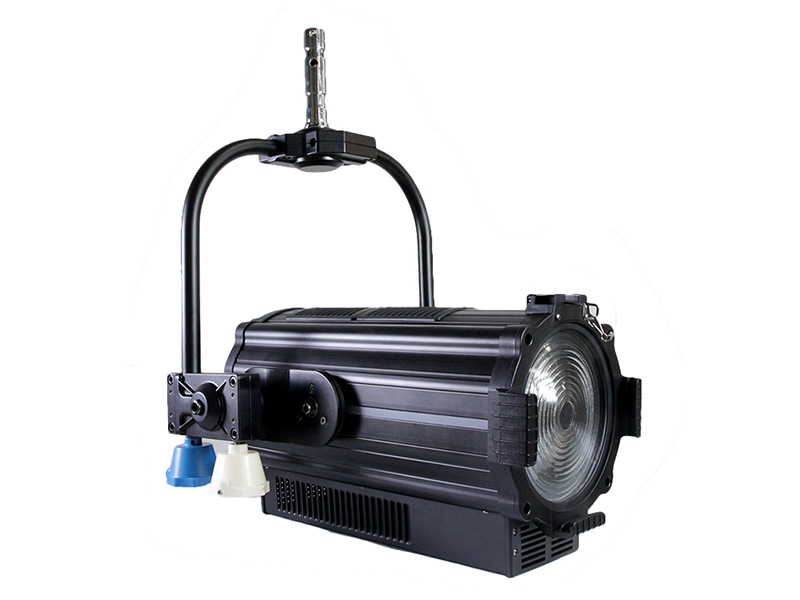
The magic of the Fresnel spot happens within its optical train. The lens itself is composed of a series of concentric circular grooves. These grooves act as individual refracting surfaces, bending the light toward the center. Because the lens is thinner than a traditional plano-convex lens of the same power, it retains less heat and is significantly lighter, preventing the glass from cracking under high temperatures.
Internal mechanics are equally important. Inside the housing, the light source and the reflector move together as a single unit. When the unit is moved toward the rear of the housing (away from the lens), the light rays converge into a narrow fresnel spot. Conversely, when moved toward the front (closer to the lens), the rays spread out to create a wide flood. This mechanical adjustment provides a physical zoom range that digital or panel lights cannot replicate.
Modern LED Fresnel spot fixtures have improved this process by replacing traditional filaments with high-density LED arrays. These arrays are engineered to mimic a single point source of light, ensuring that the Fresnel lens can still focus the beam effectively. This hybrid of classic optics and modern energy efficiency allows for precise beam shaping without the massive power draw or heat generation of older models.
The primary advantages of Fresnel lights include their exceptional beam control, the ability to produce soft-edged shadows that blend easily, a high degree of portability due to lightweight lens design, and the flexibility to transition between spot and flood modes instantly.
The Fresnel spot is famous for its "clean" beam. Unlike PAR lights that can be messy and scattered, a Fresnel allows the user to use barn doors to "cut" the light off of specific areas. This is vital for keeping light off a camera lens to prevent flare or keeping the background dark while the subject is brightly lit.
Because of the concentric rings on the lens, the light is slightly diffused as it passes through. This creates "soft" shadows. In portraiture or interview settings, this means the light wraps around the subject's features, hiding skin imperfections and preventing the harsh, "deer in the headlights" look.
Compared to standard open-face fixtures, the Fresnel spot uses its reflector and lens combination to capture and project a higher percentage of the light produced by the lamp. This efficiency ensures that more of the wattage you pay for actually reaches the subject.
The stepped design of the lens allows it to be much thinner than a solid glass lens. In a B2B or industrial setting, this translates to a fixture that can run for hours during a broadcast or theater performance without the risk of thermal shock shattering the glass.
Fresnel lights are categorized primarily by their light source, with the three main types being LED Fresnels for energy efficiency, Tungsten Fresnels for traditional warm color rendering, and HMI Fresnels for daylight-balanced high-intensity output.
Type | Light Source | Color Temperature | Best Use Case |
LED Fresnel | Semiconductor Array | Variable (3200K - 5600K) | Modern TV studios, Interviews |
Tungsten Fresnel | Halogen Filament | Warm (3200K) | Traditional Theatre, Film Noir |
HMI Fresnel | Hydrargyrum Medium-arc Iodide | Daylight (5600K) | Outdoor sets, High-speed filming |
LED Fresnel spot units have become the industry standard for new installations. They offer the ability to change color temperature from warm tungsten to cool daylight with the turn of a dial, eliminating the need for plastic gels. Furthermore, they support DMX control, allowing for remote dimming and adjustment from a lighting console, which is a major logistical advantage for large-scale facilities.
Tungsten models are still valued for their perfect Color Rendering Index (CRI). Many cinematographers prefer the way skin tones look under a physical burning filament. However, they require significant power and generate intense heat, often requiring heavy-duty air conditioning in the studio. HMI Fresnels are the heavy hitters, used mostly in film production when the light needs to compete with the sun. They are incredibly bright but require external ballasts and are generally more expensive.

Fresnel lighting is utilized across a wide range of professional environments, serving as the primary tool for key lighting in television studios, highlighting actors on theatrical stages, and providing accent lighting in high-end architectural and retail displays.
In a newsroom, the anchor must be separated from the background. A Fresnel spot is typically used as a "Back Light" or "Hair Light" to create a rim of light around the subject's shoulders, providing depth. Its adjustable beam ensures the light doesn't spill onto the expensive LED video walls behind the anchor.
Filmmakers use Fresnels to simulate natural light coming through a window. Because the beam can be focused, they can create a "slat" of light across a room. The fresnel spot provides the punch needed to create high-contrast, dramatic scenes while the soft edges keep the scene looking cinematic rather than artificial.
On stage, Fresnels are used for "Area Lighting." By overlapping several Fresnel spots, a lighting designer can cover the entire stage in an even wash of light. Because the edges are soft, the audience cannot see where one light ends and another begins, creating a seamless visual field.
When compared to other fixtures, the Fresnel light stands out for its adjustable beam angle and soft edges, whereas Ellipsoidals offer sharp edges for patterns, PAR lights offer raw power with less control, and LED Panels offer soft light with no beam distance.
Feature | Fresnel Spot | Ellipsoidal (LEKO) | LED Panel |
Beam Edge | Soft / Diffused | Sharp / Hard | Extremely Soft |
Focusable | Yes (Spot to Flood) | Yes (Sharp to Blur) | No |
Control | Barn Doors | Internal Shutters | Honeycomb Grids |
Primary Use | Key/Fill Lighting | Gobos / Patterns | General Wash |
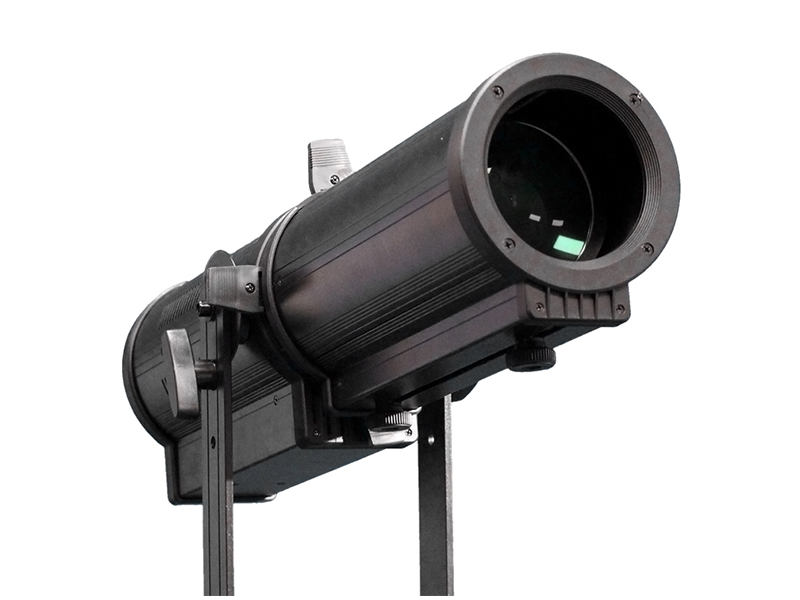
The Fresnel spot is the "middle ground" of lighting. If you need a circle of light that looks like a natural sunbeam, you choose a Fresnel. If you need to project a specific shape (like a window frame or a logo), the Ellipsoidal is better because of its internal shutters and gobo slots.
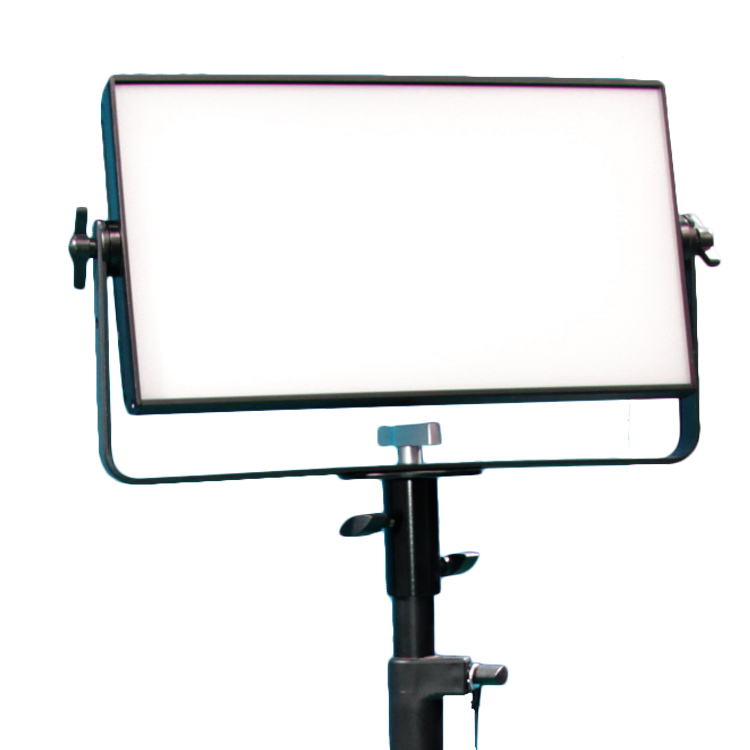
LED Panels are popular for quick setups because they are very thin and produce soft light. However, they lack "throw." A Fresnel spot can sit 20 feet away from a subject and still provide a bright, focused beam, whereas an LED panel's light would scatter and disappear at that distance. This makes the Fresnel essential for large studios with high ceilings.
To choose the right Fresnel light, one must evaluate the Color Rendering Index (CRI) for color accuracy, the wattage or lumen output for sufficient brightness, the cooling system noise levels for quiet studio environments, and the build quality of the housing.
When shopping for a Fresnel spot, look for a CRI rating above 95. This ensures that the light accurately represents colors, which is vital for skin tones and product photography. For B2B purchasers in the broadcast industry, the "TLCI" (Television Lighting Consistency Index) is actually more important than CRI, as it measures how the light looks through a camera sensor rather than the human eye.
Another factor is the dimming curve. Cheap LED Fresnels might flicker when dimmed or jump in brightness. Professional-grade Fresnel spot fixtures offer smooth, 0-100% dimming without any color shift. This is crucial for live broadcasts where lighting transitions must be invisible to the viewers.
Finally, consider the cooling mechanism. In a quiet studio environment where microphones are sensitive, a loud cooling fan can ruin a recording. High-quality LED Fresnels often feature "Silent Mode" or fanless heat-sink designs. While these might be more expensive, they save significant costs in post-production audio cleaning.
Setting up a Fresnel light involves mounting the fixture securely to a grid or stand, adjusting the spot-to-flood knob to achieve the desired beam width, and utilizing four-leaf barn doors to mask unwanted light spill from the environment.
Always secure the Fresnel spot with a safety cable. Because these fixtures can be heavy and are often hung over people's heads, the safety cable acts as a backup should the primary clamp fail. Ensure the T-handle is tightened firmly to prevent "drift" during the shoot.
The most common setup for a Fresnel spot is as the "Key Light." Place the light 45 degrees to the side of the subject and 45 degrees above them. This creates a natural shadow on one side of the face, adding dimension. Use a second Fresnel as a "Back Light" to separate the subject from the background.
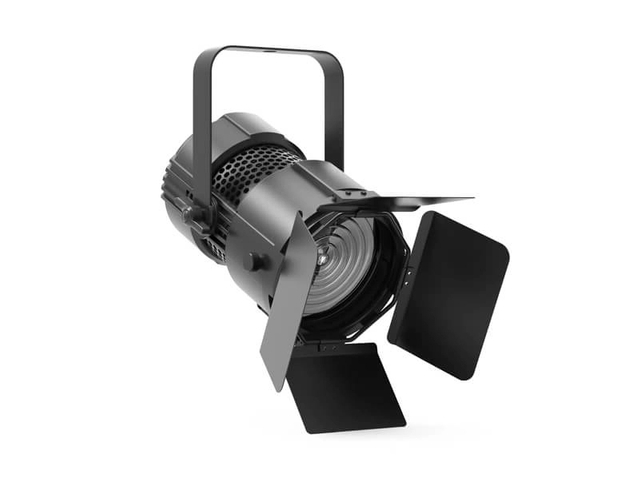
Barn doors are the four metal flaps on the front of the light. They are not just for protection; they are your primary shaping tool. By closing the top and bottom flaps, you can create a horizontal strip of light. This is perfect for lighting a group of people standing in a line while keeping the floor and ceiling dark.
For Tungsten models, never touch the bulb with your bare hands, as skin oils can cause the glass to explode. For LED Fresnel spot units, ensure the ventilation vents are free of dust. Regularly checking the DMX cables for integrity will prevent flickering during important live events.