 English


Views: 0 Author: Site Editor Publish Time: 2026-01-17 Origin: Site


A medium-sized studio is the core carrier of content creation, required to meet the "zero-error" demands of news live broadcasts, support the "strong expressiveness" of variety show recordings, and accommodate the "atmosphere creation" of diverse scenarios such as interviews and galas. Its lighting design must balance functionality, artistry, and technical stability within limited space, transforming each beam of light into a "second language" for content through scientific lighting, intelligent control, and scenario-based configuration.
Medium-sized studios (typically 200-500㎡ in area, 4-6 meters in ceiling height) face three core contradictions in lighting design:
Functional Conflict: News live broadcasts require "flat, shadowless light with true colors," while variety show recordings demand "rich layers and dynamic appeal." The same space must accommodate these two extreme needs.
Space Constraints: Limited ceiling height and area require avoiding glare, heat accumulation, and operational inconvenience caused by stacking fixtures.
Efficiency Pressure: Dense program schedules demand rapid "scene switching" to reduce manual debugging time.
Thus, design should revolve around "precise light control, flexible switching, and safe stability," maximizing the value of "one hall, multiple uses" through a three-dimensional framework of "basic lighting + effect lighting + intelligent brain."

Based on functional needs and technical feasibility, the lighting system of a medium-sized studio can be divided into five core modules, each with distinct roles and mutual complementarity.
Core Function: Construct the "basic outline" of people and scenes, ensuring clear main subjects and accurate color reproduction. It serves as a "safety net" for all scenarios.
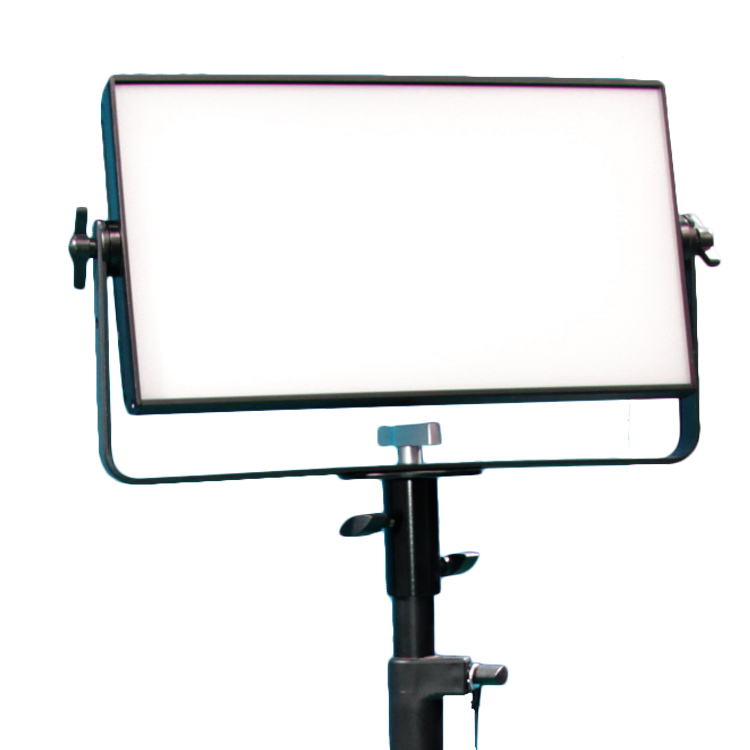
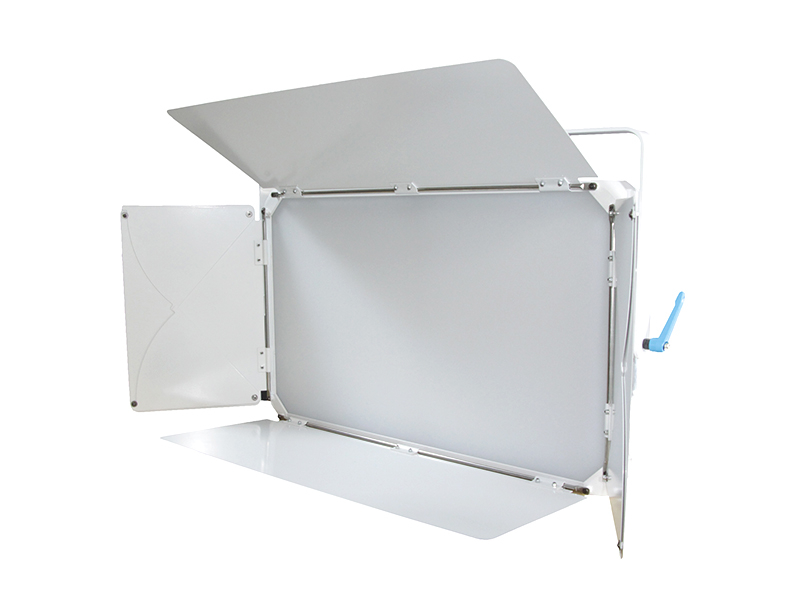
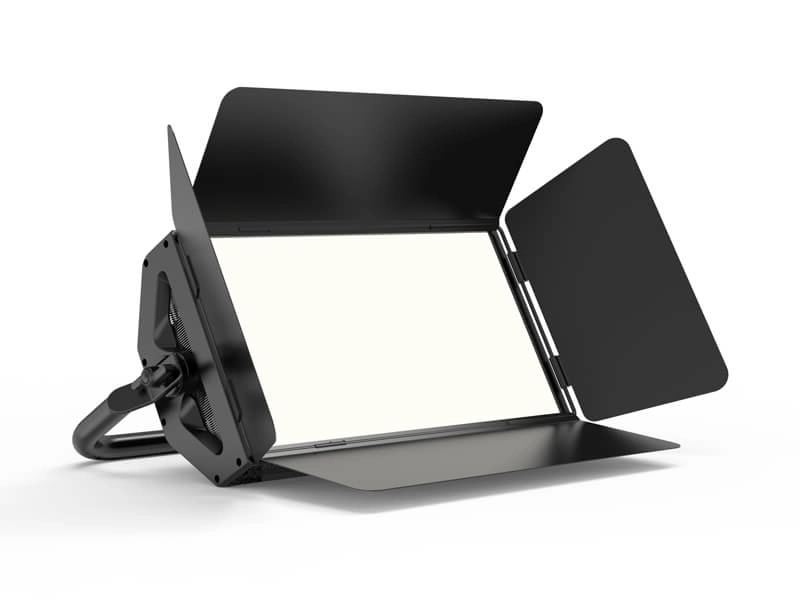
Front Light System: Use LED panel lights or imaging light arrays, installed on the front side of the studio area (2-2.5 meters above the ground, level with the host’s eyes). Color temperature: 4000K-5600K (cooler for news, warmer for variety shows). Color Rendering Index (CRI) ≥90. Use softboxes or diffusers to avoid hard light spots, ensuring hosts’ faces are shadow-free and skin tones natural.
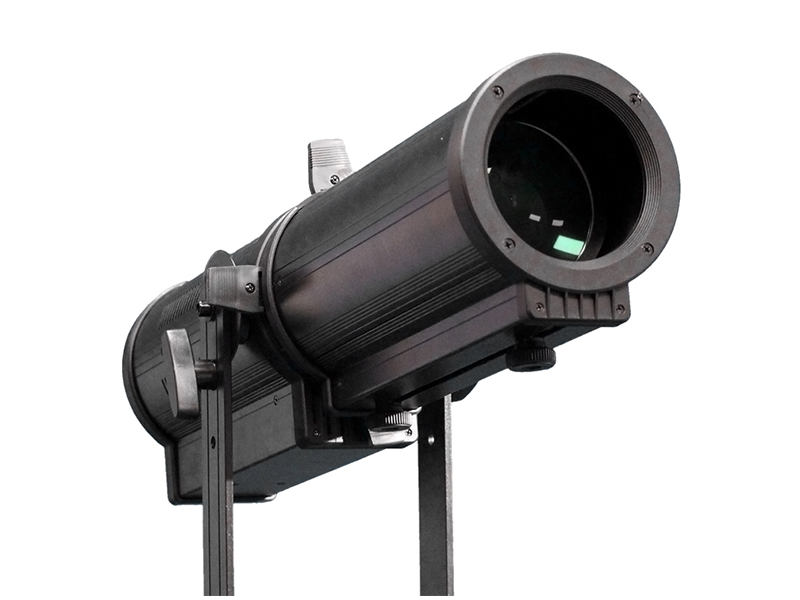
Backlight/Contour Light System: Use LED spotlights or color wash lights, installed on the rear side of the studio area (forming a 45° angle with the front light). Narrow beam angle precisely outlines shoulders, neck, and hair. Color temperature: 500-1000K higher than the front light (e.g., 5000K backlight if front light is 4000K) to enhance stereoscopic effect and prevent people from blending into the background.
Core Function: Strengthen program themes and guide audience emotions through color, dynamics, and graphic changes, acting as a "visual catalyst" in the era of "content is king."
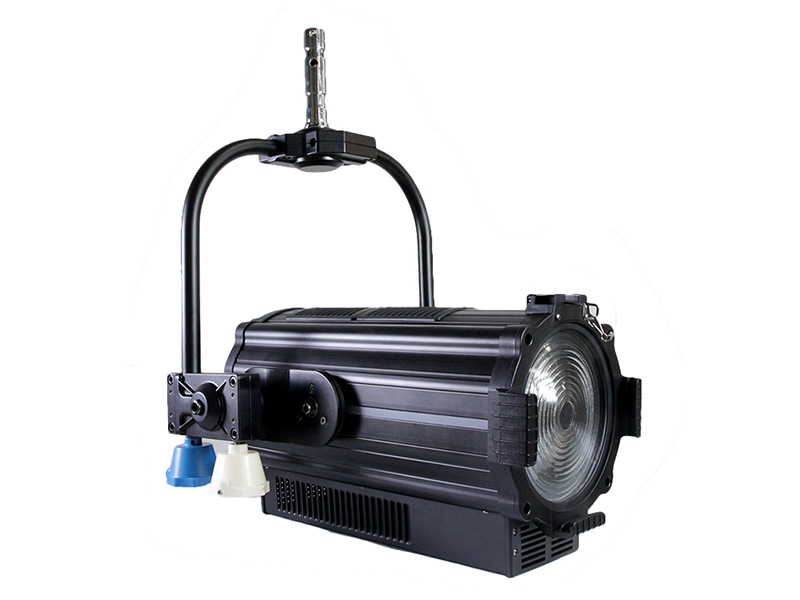
Color Wash Lights: Select LED moving-head color wash lights (e.g., PAR lights, 3-in-1 lights), installed on ceiling trusses. RGBW four-color mixing, single-light power 100-200W. Achieve single-color gradients, multi-color breathing, and color block splicing via DMX512 protocol (e.g., single-color steady light for news, multi-color flow for galas).
Strobe Lights: As a "rhythm enhancer," create strong visual impact through rapid flashing, suitable for climactic atmospheres in variety shows and galas.
Beam Lights: As "spatial embellishments," use narrow-beam (1°-3°) moving-head beam lights installed at the four corners of the ceiling. Create "light trails" and "starbursts" via rapid rotation and prism splitting (e.g., 8-prism), reserved for climactic segments (e.g., gala openings, award moments) to avoid visual fatigue.

Foreground (Host Area): Prioritize front and back lights to highlight the main subject and prevent background light from "stealing the show."
Midground (Guest/Interaction Area): Supplement with soft spotlights or floor lights, with slightly lower illuminance than the foreground to maintain layering.
Background (Large Screen/Backdrop): Use color wash lights for coloring, avoiding pure black backdrops that cause oppressive visuals.
Glare Prevention Design: All fixtures equipped with anti-glare covers or grids. Strictly control front/back light angles within 15°-45° (avoiding direct hits on the audience/camera lenses). Direct color wash/beam lights away from the main shooting area.
Heat Dissipation Management: Use fanless silent LED fixtures and reasonable wiring management to prevent high temperatures from affecting equipment lifespan.

The lighting design of a medium-sized studio is an interweaving of technical rationality and artistic sensibility. It does not need the "brightest lights," but the "lights that best understand the scene"—using front lights to uphold the baseline of "authenticity," effect lights to expand the boundaries of "imagination," and intelligent control to raise the ceiling of "efficiency." When news anchors speak with clarity under flat light, singers sing passionately in colored light, and interviewees open up in warm light, this "thinking light" truly becomes an "invisible partner" in content creation, making every recording shine brilliantly with light.