 English


Views: 0 Author: Site Editor Publish Time: 2026-06-08 Origin: Site


Upgrading a venue's lighting rig or outfitting a new production space presents a serious challenge. You must balance strict constraints against crucial technical requirements. These requirements include precise beam control, accurate color rendering, and acceptable noise levels. Choosing between LED PARs and LED Fresnels is rarely about deciding which light is universally better. Instead, it involves matching specific optical mechanics to your exact production outcomes.
Making the wrong choice can ruin your stage aesthetics. It can also create unwanted visual harshness for the audience. This article provides a clear, technical, and practical framework for evaluating both fixture types. We will explore beam quality, venue fit, and implementation risks. You will learn how to ensure your procurement perfectly matches your venue’s scalability, acoustic needs, and aesthetic standards.
Beam Quality: LED PARs deliver high-output, punchy, fixed-edge beams, while LED Fresnels provide soft, adjustable-focus pools of light with smooth falloff.
Control vs. Power: Fresnels allow precise beam shaping via barn doors; PARs are optimized for maximum lumen-per-dollar efficiency and saturated color washes.
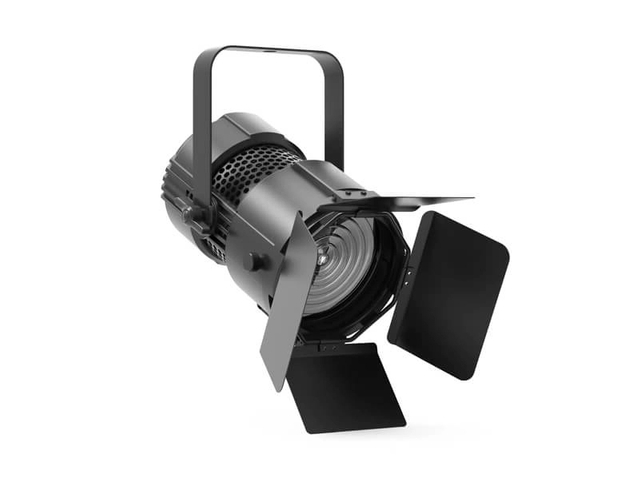
Venue Fit: An Led fresnel light is the industry standard for theatrical front lighting and studio key lighting, whereas LED PARs dominate live music, architectural washes, and backlighting.
Implementation Trade-offs: Fresnels require a higher upfront investment and heavier rigging; PARs offer budget-friendly scalability but lack edge-blending precision.
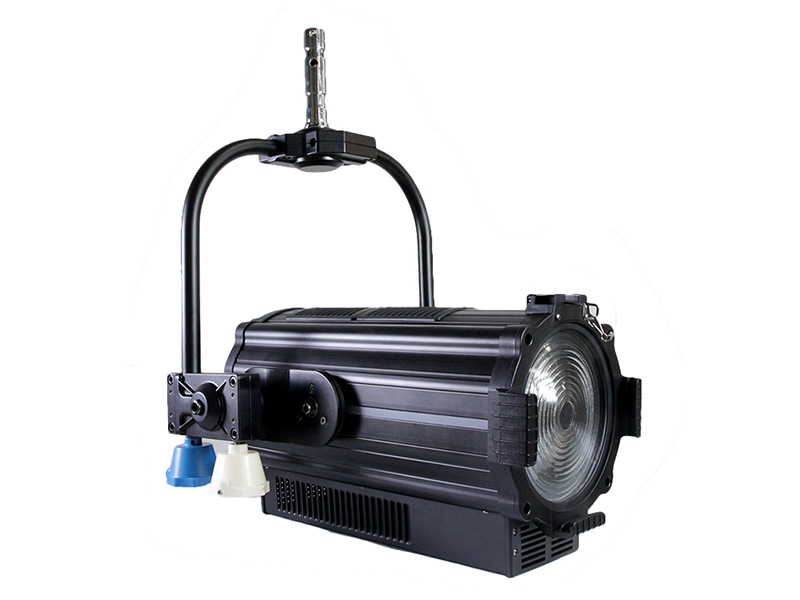
You must understand the underlying physics to make an informed choice. A traditional Fresnel relies on a specialized stepped lens. Augustin-Jean Fresnel originally designed this concentric-ringed glass for lighthouses. Today, it collimates the light efficiently. It drives the beam forward while naturally softening the outer edge. Conversely, an LED PAR uses a parabolic reflector or Total Internal Reflection (TIR) lenses. They push raw light straight ahead. This mechanical difference creates an intense, fixed-edge beam.
Focus adjustability differs greatly between the two designs. Fresnels utilize an internal sled mechanism. You can mechanically move the LED engine closer to or further from the lens. This movement transitions the beam from a tight spot to a wide flood smoothly. PAR fixtures lack this internal flexibility. They rely purely on fixed beam angles. To change a PAR's spread, you must manually insert interchangeable diffusion gels. Sometimes you must swap out the internal lenses entirely.
Edge blending remains a primary concern for lighting designers. Overlapping several PAR beams often creates visible hotspots. They produce hard shadows on the stage floor. You will notice sharp transition lines across the performance area. Fresnel beams behave much differently. They blend seamlessly together. You can achieve smooth, even stage washes without jarring transition lines. This soft falloff makes them incredibly forgiving during complex stage blocking.
Always measure your typical throw distance before selecting a fixed-lens PAR.
Use heavy frost gels if you are forced to blend multiple PAR fixtures.
Regularly clean the stepped glass of your Fresnels to maintain maximum light output.
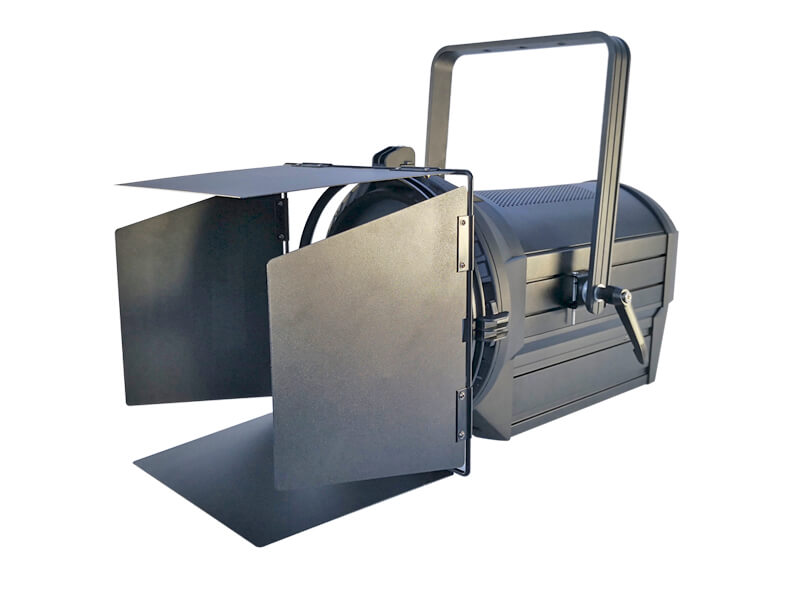
An Led fresnel light for theater serves as the absolute industry standard. It is strictly non-negotiable for primary key lighting. You need this specific optical design for proper face illumination. These premium fixtures boast high Color Rendering Index (CRI) scores. They also achieve high Television Lighting Consistency Index (TLCI) ratings. High scores ensure skin tones look completely natural. They provide highly flattering shadow roll-off around facial features.
Let us discuss beam shaping and barn door efficacy. Many buyers hold a common misconception about beam control. They assume barn doors work universally across all stage fixtures. Barn doors work effectively only on Fresnels, PC spots, or Profile fixtures. The single light source and stepped lens allow for sharp, precise cuts. Barn doors on LED PARs behave poorly. They merely reduce side glare. They cannot shape the beam cleanly into geometric patterns.
Primary applications for these units are diverse and demanding. You will find them heavily utilized in broadcast studios. They populate theatrical front-of-house (FOH) lighting positions constantly. They also dominate gallery accent lighting and cinematic key lighting setups. Any environment requiring pristine, controllable light demands this fixture type.
We must acknowledge the practical investment reality. These fixtures command a higher upfront cost per unit. The complex optics require precision manufacturing. They also demand heavier thermal management systems. Manufacturers must keep the single-source COB (Chip on Board) LED exceptionally cool. This complexity drives the price higher, but it delivers unmatched professional polish.
LED PARs excel spectacularly in raw output and sheer punch. They maximize lumen output to deliver incredibly saturated color washes. You need this intense power to cut through atmospheric haze. They perform brilliantly during a live concert performance. The internal TIR lenses gather every ounce of light efficiently. They shoot it forward to create dramatic mid-air beam effects.
Form factor and durability make them absolute touring favorites. They remain highly lightweight compared to sophisticated theatrical units. Manufacturers build them using robust, tour-ready casings. You can often find them featuring IP65 ratings for outdoor festival use. Riggers love their ease of rapid deployment. They speed up load-in times for massive touring rigs significantly.
Their primary applications lean heavily toward high-energy environments. They rule live music venues and dynamic event uplighting. They serve excellently as theatrical backlighting or vibrant top lighting. You will also see them powering massive architectural washes on building facades. They provide massive coverage quickly.
However, you must accept certain fundamental limitations. You cannot cleanly cut the beam using external accessories. They produce extreme harshness and jagged shadows when used as a front light. Multi-diode arrays often create visible "color shadows" on human subjects. You should avoid them entirely for vital key lighting applications.
Feature | LED PAR | LED Fresnel |
|---|---|---|
Beam Edge | Hard and defined | Soft and blended |
Focus Type | Fixed or interchangeable lens | Mechanical sliding zoom |
Barn Door Utility | Poor (Glare reduction only) | Excellent (Precise beam cutting) |
Light Engine | Often multi-diode arrays | Usually single-source COB |
Evaluating venue fit requires examining your physical infrastructure carefully. You must address the weight differences first. Fresnels are typically much heavier. They house large glass lenses and substantial internal heat sinks. You must evaluate the load capacity of your existing lighting bars. Robust safety cables are completely mandatory. You cannot overload a lightweight pipe grid safely.
Assess Rigging Capacity: Calculate the total weight of the proposed fixtures. Compare it against your motorized hoists or fixed pipe limits.
Check Clearance: Ensure you have enough physical headroom. Large barn doors require significant operational space above the stage.
Acoustic compliance plays a massive role in intimate spaces. We call this the silent factor. Fan noise represents a critical implementation risk. In quiet theaters or active broadcast studios, cheap LED fixtures introduce unacceptable ambient noise. Microphones pick up this fan drone easily. You must rigorously evaluate fanless, convection-cooled models versus active-cooling designs. Always request decibel ratings from the manufacturer before purchasing.
DMX control and dimming curves dictate your final visual polish. Higher-end fixtures offer sophisticated 16-bit dimming. This provides a theater-smooth, unnoticeable fade-to-black. It calculates 65,536 steps of intensity. Budget PARs often utilize standard 8-bit dimming. They suffer from steppy dimming curves. The light snaps off abruptly at the bottom 10 percent of the intensity range. You notice this immediately during dramatic scene transitions.
You must avoid mixing color engines across your rig. We strongly warn against buying fixtures from different manufacturers. Mixing mismatched LED arrays creates absolute chaos. Combining RGBW, RGBA, or custom 6-color engines complicates programming heavily. Console color-matching becomes a massive nightmare for lighting programmers. Stick to a unified color ecosystem to ensure smooth gradients.
Thermal management failures cause severe long-term operational issues. High-output LEDs generate intense internal heat at the diode junction. Enclosed fixtures are especially vulnerable to heat buildup. If you install fixtures in a venue lacking proper ceiling ventilation, your risk increases. You might experience permanent color shift. You will also see a severely reduced operational lifespan. Airflow remains critical.
Finally, balance your technical specifications wisely. Follow a simple shortlisting rule to protect your production value. Do not waste your budget on expensive, soft-edge fixtures for a rock-and-roll backlight rig. Conversely, do not compromise using harsh, unblended beams for a broadcast news desk. Over-specifying burns cash unnecessarily. Under-specifying ruins the production quality instantly.
Mounting heavy fixtures without double-checking the clamp weight ratings.
Ignoring the Pulse Width Modulation (PWM) frequency when shooting video. Low PWM causes camera flicker.
Assuming all RGBW diodes produce the exact same shade of white.
Choosing between these two essential lighting tools requires honest evaluation. We evaluated beam quality, optical mechanics, and venue fit. You should select LED PARs when you need cost-effective power. They excel at intense color washing and rugged touring setups. Conversely, you should choose LED Fresnels for precise control. They deliver soft edges and professional key lighting seamlessly.
We recommend taking immediate, actionable next steps. First, audit your current rig's DMX universe capacity. Ensure you have enough channels for 16-bit dimming modes. Second, measure your exact throw distances to determine necessary beam angles. Finally, always request a physical demo or an official photometric data sheet before issuing any purchase order. Testing the fixture in your actual space prevents costly mistakes.
A: It is possible but not recommended for professional results. The hard edges create visible hotspots on the stage. The shadows appear exceptionally harsh on human faces. It requires heavy diffusion gels to soften the beam. This severely cuts the overall light output and ruins efficiency.
A: No. While the internal LED chip generates heat, the fixture manages it using internal heat sinks or fans. The front lens and the actual beam emit virtually no forward radiant heat. This makes the stage vastly more comfortable for performers.
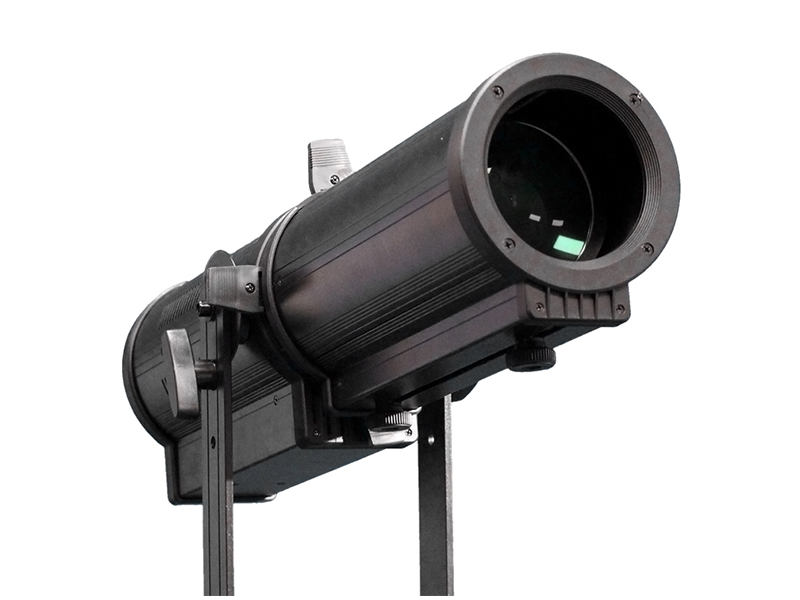
A: A Fresnel provides a soft-edged wash. You control it loosely using external barn doors. A Profile provides a hard-edged, precisely focused beam. It can project gobos clearly. You can also cut the beam into sharp geometric shapes using its internal framing shutters.